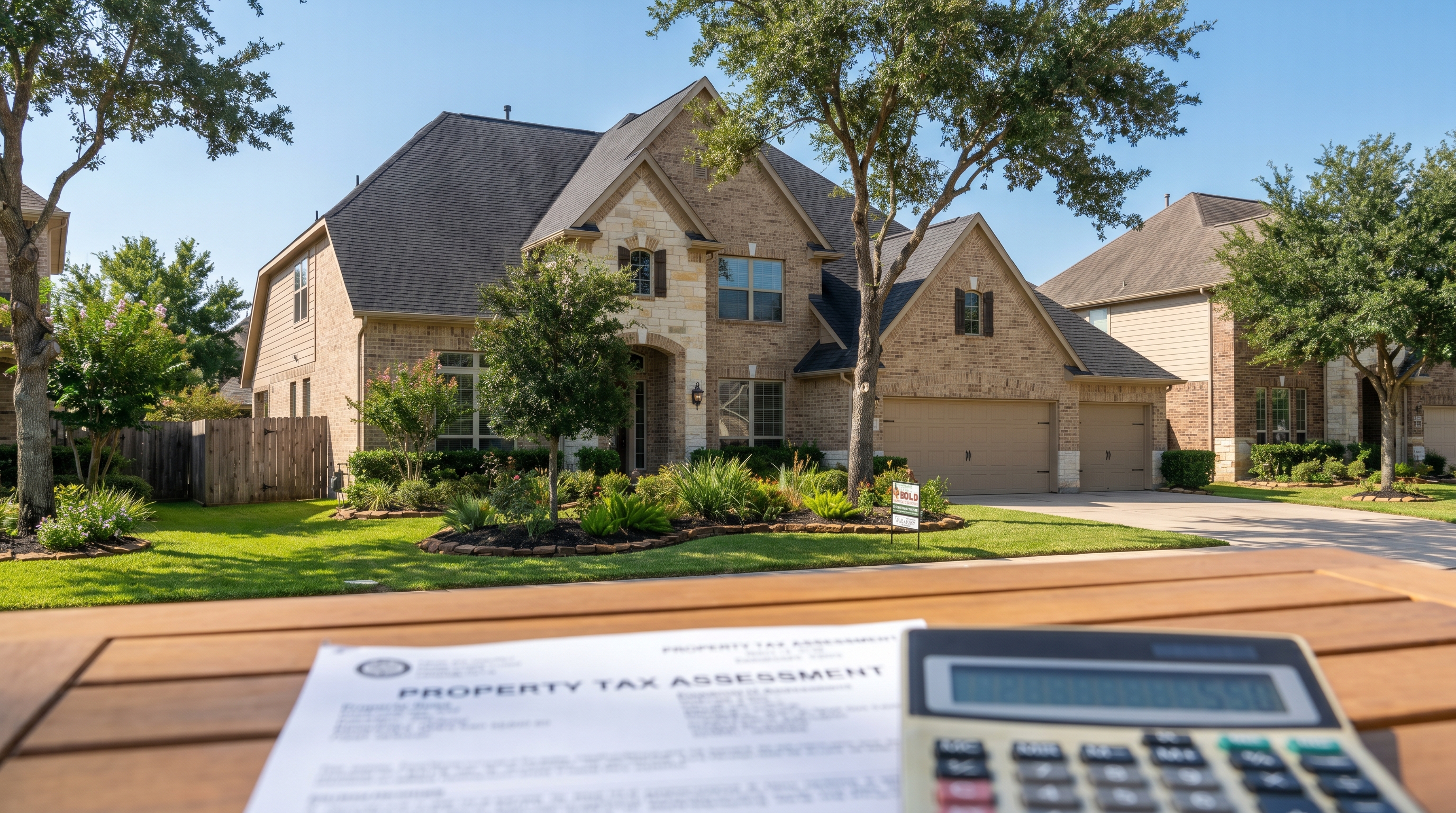
Houston Property Taxes Explained: MUD Districts, Homestead Exemptions, and What You Actually Pay
Houston Property Taxes Explained: MUD Districts, Homestead Exemptions, and What You Actually Pay
So here's what a lot of people don't realize about Houston property taxes. Everyone talks about no state income tax. And that's true -- Texas is one of nine states with no personal income tax. But here's the other half of the equation that those relocation articles leave out: property taxes.
Texas has some of the highest property tax rates in the country, and Houston's tax structure is more complicated than most cities because of something called a MUD -- a Municipal Utility District. If you've never heard of a MUD, you're not alone. Most buyers discover MUD taxes for the first time at the closing table, and by then it's too late to factor them into the budget.
I have this conversation with every buyer who walks through our door. So let me break it down for you the same way I do for my clients: exactly how Houston property taxes work, what a MUD is and why it exists, how the homestead exemption saves you money, and what you'll actually pay on a home at different price points in different parts of the metro area.
How Houston Property Taxes Are Calculated
Here's the first thing you need to know. Every property owner in the Houston area pays taxes to multiple overlapping jurisdictions. Your property tax bill isn't one tax -- it's a stack of separate taxes collected by different entities. The Harris County Tax Assessor-Collector sends one bill, but that bill includes line items from several taxing authorities.
Here's what the typical Houston property tax bill includes:
| Taxing Authority | Typical Rate (per $100 valuation) | Purpose |
|---|---|---|
| County (Harris, Fort Bend, or Montgomery) | $0.30 -- $0.47 | Roads, courts, law enforcement, county services |
| School District (Katy ISD, Fort Bend ISD, HISD, etc.) | $1.00 -- $1.30 | Public school funding (largest single component) |
| City (Houston, Sugar Land, etc.) | $0.50 -- $0.55 | City services, fire, police, infrastructure |
| MUD / Special District | $0.00 -- $1.50+ | Water, sewer, drainage, roads in newer developments |
| Community College (HCC, Lone Star, etc.) | $0.07 -- $0.10 | Community college funding |
| Hospital District | $0.15 -- $0.17 | Public hospital and healthcare services |
| Port Authority / Flood Control | $0.01 -- $0.04 | Port operations, flood infrastructure |
The total effective tax rate for a Houston-area property ranges from approximately 1.8% to 3.5% of assessed value, depending on location. The single largest variable in that range is whether the property sits inside a Municipal Utility District. (Source: Harris County Tax Assessor-Collector, HCAD, FBCAD)
The Harris County Appraisal District (HCAD) determines the appraised value of each property in Harris County annually. Fort Bend County Appraisal District (FBCAD) and Montgomery County Appraisal District handle properties in their respective counties. And here's what's super important to understand: the appraised value -- not the purchase price and not the listing price -- is the number your tax bill is calculated from. (Source: HCAD, hcad.org)
What Is a MUD and Why Does Houston Have So Many?
A Municipal Utility District is a special-purpose district created by the Texas Commission on Environmental Quality (TCEQ) to finance water, sewer, drainage, and road infrastructure in areas that aren't served by a city's existing utility system. MUDs are the reason Houston's suburbs can build master-planned communities in formerly undeveloped land -- the MUD finances the pipes, roads, and drainage before the homes are built, and homeowners repay that debt through supplemental property taxes. (Source: TCEQ, tceq.texas.gov)
Houston has more than 800 active MUDs -- more than any other metro area in Texas. MUDs are concentrated in the newer suburban developments west, north, and southwest of the city, particularly in unincorporated areas of Harris County and Fort Bend County. Communities like Cinco Ranch, Cross Creek Ranch, Elyson, Bridgeland, and Sienna were all built within MUD boundaries. (Source: TCEQ MUD Registry)
How MUD taxes work: When a developer builds a new subdivision, the MUD issues bonds to pay for infrastructure -- water treatment plants, sewer lines, drainage channels, and roads. Homeowners within the MUD boundaries pay a supplemental tax rate on top of their regular county, school, and city taxes to retire those bonds. MUD tax rates range from $0.25 to $1.50 or more per $100 of assessed valuation, depending on how much infrastructure debt remains. (Source: Harris County Tax Assessor-Collector)
And here's the good news: MUD tax rates decrease over time as the infrastructure bonds are paid off. A MUD that charges $1.25 per $100 today might charge $0.50 per $100 in fifteen years as bonds mature. Some of Houston's oldest MUDs have retired all their debt and dissolved entirely. This means buyers in newer subdivisions pay the highest MUD rates, while buyers in established neighborhoods pay little or nothing. (Source: TCEQ Annual MUD Reports)
The practical impact: On a $400,000 home, a MUD tax rate of $1.00 per $100 adds $4,000 per year to the property tax bill. A buyer comparing two homes at the same price -- one inside a MUD, one outside -- could see a difference of $2,000 to $6,000 per year in property taxes. I tell every buyer the same thing: request the MUD tax rate for any specific subdivision before making an offer. Don't compare home prices without comparing tax rates. (Source: HCAD/FBCAD tax records)
Property Tax Rates by Houston Suburb: What You Actually Pay
The total effective property tax rate varies significantly across the Houston metro area. Here's what taxes actually look like at three price points, before the homestead exemption is applied:
| Suburb / Area | Total Effective Tax Rate | Tax on $300K Home | Tax on $400K Home | Tax on $500K Home |
|---|---|---|---|---|
| Inside Houston (no MUD) | 2.0% -- 2.3% | $6,000 -- $6,900 | $8,000 -- $9,200 | $10,000 -- $11,500 |
| Katy (with MUD) | 2.8% -- 3.5% | $8,400 -- $10,500 | $11,200 -- $14,000 | $14,000 -- $17,500 |
| Sugar Land | 2.6% -- 3.2% | $7,800 -- $9,600 | $10,400 -- $12,800 | $13,000 -- $16,000 |
| The Woodlands | 2.2% -- 2.9% | $6,600 -- $8,700 | $8,800 -- $11,600 | $11,000 -- $14,500 |
| Pearland | 2.5% -- 3.0% | $7,500 -- $9,000 | $10,000 -- $12,000 | $12,500 -- $15,000 |
| Spring / Klein | 2.4% -- 3.2% | $7,200 -- $9,600 | $9,600 -- $12,800 | $12,000 -- $16,000 |
| Cypress | 2.7% -- 3.4% | $8,100 -- $10,200 | $10,800 -- $13,600 | $13,500 -- $17,000 |
Sources: HCAD, FBCAD, Montgomery County Appraisal District, Harris County Tax Assessor-Collector. Rates reflect 2025-2026 tax year. Actual rates vary by specific MUD, school district, and jurisdiction.
And here's why this matters so much. A $350,000 home in Katy with a 3.3% total tax rate generates an annual tax bill of approximately $11,550 -- while a $400,000 home in The Woodlands with a 2.4% rate generates a tax bill of approximately $9,600. The more expensive home costs less to own annually in property taxes. I run these calculations for every buyer so there are no surprises at closing.
The $140,000 Homestead Exemption: How It Saves You Money
Texas law requires every school district to offer a $140,000 homestead exemption on a property owner's primary residence. This exemption reduces the taxable value of the home for school district taxes -- the largest single component of the tax bill. The exemption was increased from $100,000 to $140,000 by the Texas Legislature in 2023 under Proposition 4. (Source: Texas Comptroller of Public Accounts; HCAD, hcad.org/hcad-online-services/homestead/)
How it works: If a home is appraised at $400,000 and you have a homestead exemption, the school district calculates taxes on $260,000 ($400,000 minus $140,000) instead of the full appraised value. At a school district tax rate of $1.10 per $100, that saves you $1,540 per year in school taxes alone. (Source: Texas Comptroller)
Additional county exemptions stack on top of the state exemption. Harris County offers an additional 20% optional homestead exemption for county taxes. Fort Bend County and Montgomery County each offer their own optional exemptions. These county exemptions reduce the taxable value for county taxes specifically, further lowering the total bill. (Source: HCAD; FBCAD)
And here's the one most people don't know about: the homestead exemption also caps annual appraisal increases at 10%. Even if the market value of your home rises 20% in a single year, HCAD can only increase the taxable value by 10% for homestead properties. This cap protects homeowners from sudden tax spikes during rapid appreciation periods. I tell every buyer: file for the homestead exemption within 30 days of closing. (Source: HCAD)
Who qualifies: Any Texas resident who owns and occupies a home as their primary residence qualifies for the homestead exemption. The home must be your principal residence as of January 1 of the tax year. Investment properties, second homes, and rental properties don't qualify. (Source: Texas Property Tax Code, Section 11.13)
How to file: Applications are filed with the county appraisal district (HCAD, FBCAD, or Montgomery CAD) and can be submitted online, by mail, or in person. There's no cost to file. The exemption stays in effect until you sell the property or move. No annual renewal required. (Source: HCAD)
The No-State-Income-Tax Tradeoff: Is Houston Actually Cheaper?
So here's the question every relocator asks me. Texas has no state income tax, but property tax rates rank sixth highest in the nation according to the Tax Foundation's 2025 State Tax Comparison report. Does the property tax burden offset the income tax savings?
The answer depends on your income level and home value. Let me break it down for the three most common origin states I see:
| Scenario | Annual Income | Home Value | State Income Tax Saved | Houston Property Tax | Net Savings |
|---|---|---|---|---|---|
| From California | $150,000 | $400,000 | ~$10,800 (CA rate: 7.2% effective) | ~$10,000 (2.5% rate) | +$800/yr |
| From California | $250,000 | $600,000 | ~$20,000 (CA rate: 8.0% effective) | ~$15,000 (2.5% rate) | +$5,000/yr |
| From New York | $150,000 | $400,000 | ~$9,000 (NY rate: 6.0% effective) | ~$10,000 (2.5% rate) | -$1,000/yr |
| From Illinois | $150,000 | $400,000 | ~$7,400 (IL flat 4.95%) | ~$10,000 (2.5% rate) | -$2,600/yr |
Note: Effective state income tax rates are approximate and vary based on filing status, deductions, and local taxes. Property tax figures assume 2.5% effective rate with homestead exemption applied. Sources: Tax Foundation 2025 State Tax Comparison, state tax authority published rates.
Here's the key insight: Higher earners relocating from high-income-tax states like California benefit the most from the Texas model. For moderate earners buying modest homes, the property tax burden can exceed the income tax savings -- especially in high-MUD-rate suburbs. I walk every relocating buyer through this calculation using their specific income and target price range. It takes five minutes and it can completely change which suburb makes sense.
How to Protest Your HCAD Property Tax Appraisal
HCAD reappraises every property annually. If the appraisal seems too high, you have the right to protest. And here's why you should: HCAD reports that approximately 60% of protests result in a reduction. Those are good odds. (Source: HCAD Annual Report)
The protest timeline:
- HCAD mails appraisal notices in April each year
- You have until May 15 (or 30 days after the notice date, whichever is later) to file a protest
- Informal hearings are scheduled first -- many cases settle here
- If unsettled, the case goes to the Appraisal Review Board (ARB)
- Decisions are issued by late summer
DIY vs hiring a consultant: Property tax consultants typically charge 30% to 40% of the first-year savings on a contingency basis -- meaning if they don't reduce your appraisal, you pay nothing. For homes above $500,000, consultants often find larger reductions because they have access to comparable sales data and appraisal methodology expertise. For homes under $400,000, a DIY protest using recent comparable sales from HAR or Zillow is often sufficient. (Source: HCAD protest procedures, hcad.org)
What works in a protest: Present three to five comparable sales (similar size, age, condition, and location) that sold for less than the appraised value. Focus on condition differences -- if comparable homes are newer or recently renovated and yours is not, that supports a lower valuation. Photos of deferred maintenance, outdated finishes, or structural issues strengthen the case. (Source: HCAD Informal Hearing Guidelines)
Key Takeaways
- Houston property tax bills include taxes from five to eight overlapping jurisdictions, with total effective rates ranging from 1.8% to 3.5% -- and the single biggest variable is whether you're inside a MUD.
- The Texas homestead exemption reduces your taxable value by $140,000 for school district taxes and caps annual appraisal increases at 10%. File for it within 30 days of closing. It's free.
- Don't just compare home prices across suburbs. A $350K home in Katy can cost more annually than a $400K home in The Woodlands when you factor in property taxes.
Questions to Ask Yourself
- Do you know the total effective tax rate -- including MUD -- for the specific subdivision you're looking at, or are you relying on the suburb-wide average?
- Have you run the no-state-income-tax calculation for your specific income and target price range to see if you actually come out ahead?
- Are you filing for your homestead exemption immediately after closing, and do you know how much it will save you?
What We Can Do
Every subdivision in Houston has a different tax rate. Every MUD has different bonds. Every county offers different exemptions. The sticker price of a home tells you half the story.
We build a complete cost-of-ownership comparison for every buyer -- mortgage, taxes, insurance, and HOA combined -- for your specific neighborhoods. No guesswork, no surprises at closing. Give us a call, shoot us a text, or send us an email.
Get your cost-of-ownership comparison: [PHONE NUMBER] | [WEBSITE URL]
Have a friend relocating to Texas? We connect families with the right homes -- locally and nationwide.
Article Schema (JSON-LD)
```json
{
"@context": "https://schema.org",
"@type": "Article",
"headline": "Houston Property Taxes Explained: MUD Districts, Homestead Exemptions, and What You Actually Pay",
"description": "Complete guide to Houston property taxes including MUD districts, the $140,000 homestead exemption, suburb-by-suburb tax rates, and how to protest your HCAD appraisal.",
"author": {
"@type": "Person",
"name": "Joseph Diosana",
"jobTitle": "REALTOR",
"worksFor": {
"@type": "Organization",
"name": "The Property Joes Group"
}
},
"publisher": {
"@type": "Organization",
"name": "The Property Joes Group"
},
"datePublished": "2026-05-24",
"dateModified": "2026-05-26"
}
```
Ready to Take the Next Step?
Our team specializes in Houston real estate.
Contact The Property Joes Group