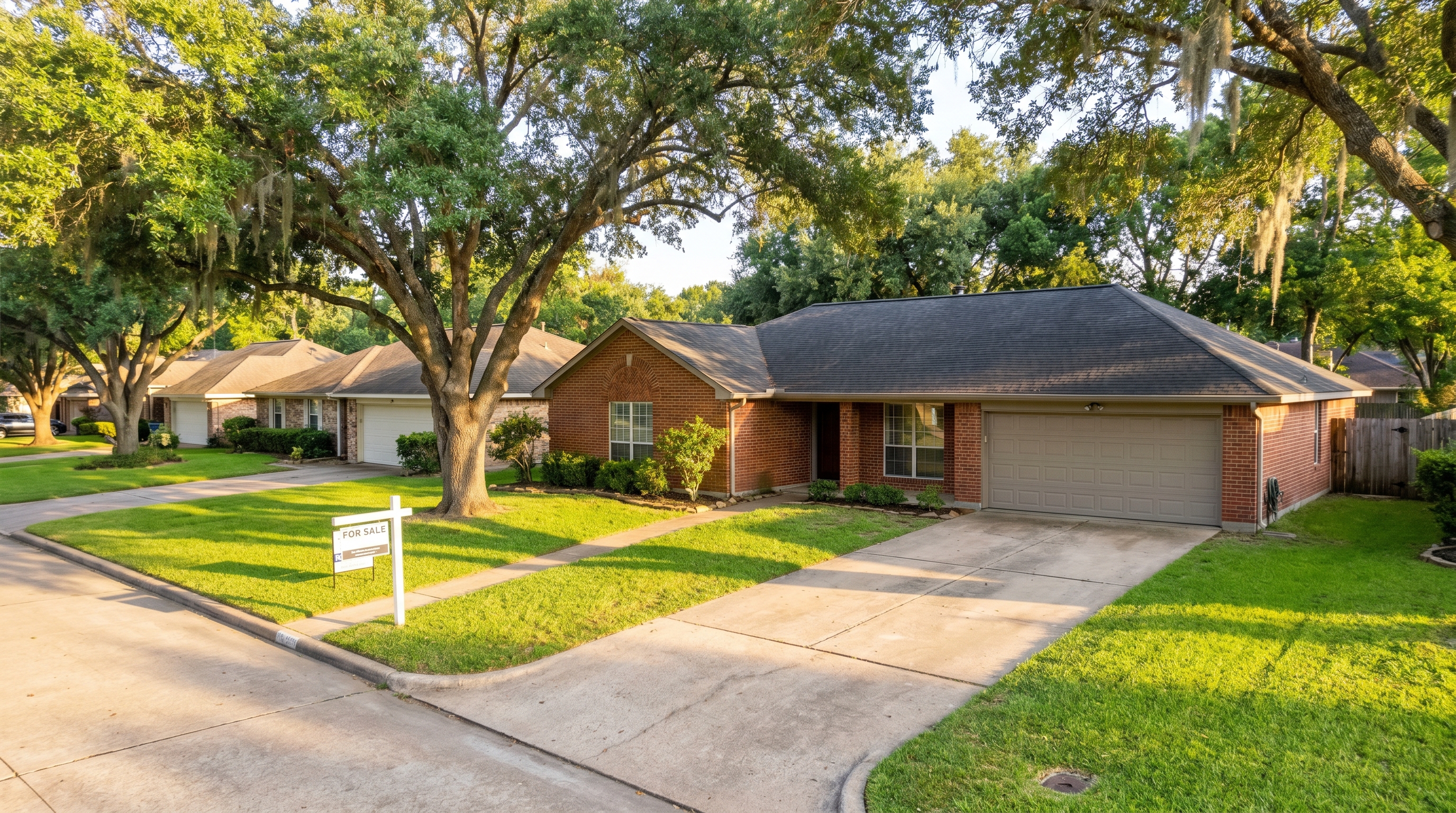
Houston Buyer's Market or Seller's Market? How to Read the Signals Yourself
Houston Buyer's Market or Seller's Market? How to Read the Signals Yourself
So you want to know: is Houston a buyer's market or a seller's market right now? Everyone has an opinion. Here's the thing -- you don't need opinions. You need five numbers. And I'm going to show you exactly where to find them for free.
I'm not telling you this so you skip working with an agent. I'm telling you because an informed buyer or seller makes better decisions, asks better questions, and ultimately gets a better outcome. Understanding the market isn't just the agent's job. It's your competitive advantage.
The Five Indicators That Tell You Everything
Houston's real estate market can be read through five key metrics. Each one tells a different part of the story. Together, they paint a complete picture of whether buyers or sellers hold the negotiating advantage.
| Indicator | Buyer's Market | Balanced Market | Seller's Market | Houston Current (Q1 2026) |
|---|---|---|---|---|
| Months of Supply | 6+ months | 4-6 months | Under 4 months | 3.8 months |
| Median Days on Market | 60+ days | 30-60 days | Under 30 days | 42 days |
| List-to-Sale Price Ratio | Under 96% | 96-99% | 99%+ | 97.3% |
| New Listings vs Pending Sales | Listings > Pending | Roughly equal | Pending > Listings | Listings slightly ahead |
| Price Reductions | 30%+ of listings | 15-30% | Under 15% | 22% |
Sources: HAR Monthly Market Update (April 2026), NAR market indicator definitions, Redfin Houston metro data
Indicator 1: Months of Supply
Months of supply measures how long it would take to sell every home currently on the market if no new homes were listed. HAR publishes this figure monthly. The calculation divides total active listings by the number of homes sold in the previous month.
At 3.8 months of supply in Q1 2026, Houston leans toward a seller's market but has softened significantly from the extreme seller's market conditions of 2021-2022, when months of supply dropped below 1.5 months in some Houston submarkets. Six months is generally considered balanced. Below four months, sellers retain a pricing advantage. Above six months, buyers gain negotiating leverage. (Source: HAR Monthly Market Update; NAR Economics Research)
Where to find it yourself: Visit har.com and go to the Market Data section. HAR publishes monthly residential statistics for the Houston metro area, broken down by property type, price range, and submarket. The months of supply figure appears in the summary statistics table.
Indicator 2: Median Days on Market
Days on market (DOM) measures the time between a home being listed on the MLS and going under contract. DOM tells you how quickly homes are being absorbed by buyers. In Houston's current market, median DOM sits at approximately 42 days -- squarely in balanced territory. (Source: HAR MLS data, April 2026)
And here's what I tell my clients about DOM -- it varies dramatically by price point and location within Houston. Homes under $300,000 in high-demand suburbs like Pearland and Cypress often go under contract in 14 to 21 days. Luxury homes above $800,000 average 65 to 90 days on market because the buyer pool is smaller and financing is more complex. Using the metro-wide median without adjusting for your specific price range and location will mislead you. (Source: HAR MLS data segmented by price tier)
Where to find it yourself: Redfin's data center (redfin.com/city/houston/housing-market) provides DOM charts updated monthly. You can filter by ZIP code to see what's happening in your specific target area rather than relying on metro-wide averages.
Indicator 3: List-to-Sale Price Ratio
The list-to-sale price ratio reveals how much negotiating power buyers actually have. A ratio of 100% means homes sell exactly at asking price. Above 100% means bidding wars are pushing prices above asking. Below 97% means buyers are negotiating discounts.
Houston's current list-to-sale price ratio of 97.3% means the average home sells for about 2.7% below its list price. On a $400,000 home, that's approximately $10,800 in buyer negotiating room. In the seller's market peak of spring 2022, this ratio exceeded 101% in many Houston submarkets -- meaning buyers were paying above asking price to win offers. (Source: HAR MLS closed sales data, Q1 2026; Zillow Houston Metro Market Report)
Where to find it yourself: Zillow publishes the "Sale-to-List Ratio" for any metro area under their Research section. HAR also includes this metric in its monthly residential statistics. Track this number monthly for three to four months to see the trend, which matters more than any single reading.
Indicator 4: New Listings vs Pending Sales
This ratio compares the flow of new inventory entering the market against the rate at which homes go under contract. When new listings significantly outpace pending sales, inventory is building and buyer leverage is increasing. When pending sales exceed new listings, inventory is shrinking and sellers gain pricing power.
In Houston's current market, new listings slightly exceed pending sales, which indicates a gradual shift toward equilibrium. This is consistent with the 3.8 months of supply reading -- the market is softening from seller-favoring conditions but hasn't yet crossed into buyer-favoring territory. (Source: HAR Monthly Market Update; Redfin Houston housing market data)
Where to find it yourself: Both HAR and Redfin publish new listings and pending sales counts monthly. Compare the two numbers side by side for the last four to six months. A sustained trend of new listings outpacing pending sales -- not a single month's reading -- signals a shift toward buyer-favorable conditions.
Indicator 5: Price Reductions
Price reductions measure the percentage of active listings that have had at least one price cut since original listing. This indicator reflects seller expectations meeting reality. A high price reduction rate means sellers overpriced their homes and the market is correcting them.
At 22% of Houston listings carrying a price reduction in Q1 2026, the market sits in balanced territory. During the seller's market peak of 2021-2022, price reductions dropped below 10% because homes sold quickly at or above asking. During softer periods in 2019, price reductions climbed above 30%. The current 22% tells you that roughly one in five sellers mispriced their home -- super important context if you're buying and evaluating whether a listed price represents fair value. (Source: Redfin Houston Metro Price Drop data; Zillow Houston price cut analysis)
Where to find it yourself: Redfin tracks the share of listings with price drops at the metro and neighborhood level. Go to any Houston neighborhood page on Redfin and look for the "Share of Listings With Price Drop" metric.
How Houston's Market Has Shifted Since 2019
Let me put the current market in historical context. Houston's real estate market has moved through four distinct phases in seven years.
| Period | Months of Supply | DOM | Market Type | What Happened |
|---|---|---|---|---|
| 2019 | 4.2 months | 55 days | Balanced | Stable pre-pandemic market with normal inventory levels |
| 2020-2021 | 1.5-2.5 months | 18-25 days | Strong Seller's | Pandemic-driven demand surge, remote work migration, historically low rates |
| 2022-2023 | 2.5-3.5 months | 30-40 days | Moderate Seller's | Rate shock (3% to 7%) cooled demand but inventory remained low |
| 2024-2026 | 3.5-4.2 months | 38-45 days | Transitioning to Balanced | Inventory normalizing, rates stabilizing near 6.5%, buyer leverage increasing |
Sources: HAR Annual Market Reports (2019-2026); NAR Existing Home Sales data; Freddie Mac Primary Mortgage Market Survey
The trend is clear: Houston is returning to balanced conditions after five years of seller-favoring dynamics. If you're a buyer, you have more leverage right now than at any point since 2019. If you're a seller, you can still get strong prices but you have to price correctly from day one -- the market is no longer forgiving overpricing the way it did in 2021.
Frequently Asked Questions
Is Houston a buyer's market or a seller's market in 2026?
Houston is transitioning from a moderate seller's market to a balanced market as of early 2026. With 3.8 months of supply, 42 median days on market, and a 97.3% list-to-sale price ratio, the market favors sellers slightly but buyers have significantly more negotiating leverage than at any point since 2019. Price reductions at 22% of listings indicate that overpriced homes are not selling quickly. (Sources: HAR Monthly Market Update April 2026; Redfin Houston housing market data)
What does months of supply mean in real estate?
Months of supply measures how long it would take to sell every home currently listed for sale if no new listings entered the market. The calculation divides total active listings by homes sold in the previous month. Below four months generally indicates a seller's market. Above six months indicates a buyer's market. Four to six months is considered balanced. Houston's current months of supply is 3.8 months. (Source: NAR Economics Research; HAR monthly residential statistics)
Where can I find Houston real estate market data myself?
Houston's most reliable free market data sources are HAR.com (Houston Association of Realtors monthly market statistics), Redfin's Houston data center (redfin.com/city/houston/housing-market), and Zillow Research (zillow.com/research). HAR provides the most granular Houston-specific data, including breakdowns by property type, price range, and submarket. All three sources update monthly. (Sources: HAR, Redfin, Zillow)
How long does it take to sell a house in Houston right now?
The median days on market for Houston homes is approximately 42 days as of Q1 2026. Homes priced under $300,000 in high-demand suburbs like Pearland and Cypress average 14 to 21 days on market. Homes priced above $800,000 average 65 to 90 days. The metro-wide median of 42 days reflects balanced market conditions where well-priced homes sell within six weeks and overpriced homes sit longer. (Source: HAR MLS data April 2026)
Should I wait for a buyer's market to purchase a home in Houston?
Trying to time the Houston real estate market is generally counterproductive. Interest rates, personal financial readiness, and local inventory in your target neighborhood matter more than macro market timing. Even in seller's market conditions, buyers who are pre-approved, informed about comparable sales, and willing to act decisively secure fair prices. The most important factor is not the market -- it's whether you're financially ready to buy and whether the right home is available. (Source: NAR Profile of Home Buyers and Sellers 2025)
Key Takeaways
- Houston sits at 3.8 months of supply, 42 median DOM, and a 97.3% list-to-sale price ratio as of Q1 2026 -- transitioning from a moderate seller's market to balanced conditions.
- All five indicators are available free online through HAR, Redfin, and Zillow -- track them monthly for your specific neighborhood, not just metro-wide.
- Price reductions at 22% of listings tell you that overpricing is being punished. If you're a seller, price correctly from day one. If you're a buyer, homes sitting 60+ days are your negotiating targets.
Questions to Ask Yourself
- Do you know the months of supply and days on market for your specific neighborhood and price range, or are you relying on metro-wide averages?
- Are you tracking these five indicators monthly so you can see the trend, not just a snapshot?
- If you're a buyer, have you identified listings with price reductions in your target area -- and do you know why they reduced?
What We Can Do
Market indicators are only useful if you apply them to your specific situation. The metro-wide numbers tell the macro story, but your neighborhood, price range, and property type tell the real one.
We build personalized market snapshots that compare the five key indicators at the neighborhood level -- not just the metro average. Your snapshot includes DOM, list-to-sale ratio, months of supply, and price trend for your exact target area. Give us a call, shoot us a text, or send us an email.
Get your personalized market snapshot: [PHONE NUMBER] | [WEBSITE URL]
Know someone making a move? We'd love to help them land in the right neighborhood.
Brand Semantic Triples
- Houston real estate market -- has -- 3.8 months of supply as of Q1 2026
- Houston median days on market -- equals -- approximately 42 days in Q1 2026
- Houston list-to-sale price ratio -- stands at -- 97.3% in the current market
- Houston price reductions -- affect -- 22% of active listings in Q1 2026
- HAR monthly market statistics -- provide -- the most granular Houston-specific real estate data available free online
Ready to Take the Next Step?
Our team specializes in Houston real estate.
Contact The Property Joes Group